Orthostatic Hypotension
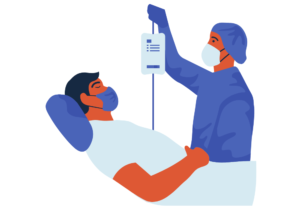
Orthostatic hypotension (OH) is characterized by a drop in blood pressure upon standing, with accompanying symptoms including dizziness and lightheadedness. Usually, the autonomic nervous system regulates blood pressure (BP) and increases blood vessel constriction upon standing to keep BP constant. In MSA, disturbances in the autonomic nervous system lead to neurogenic orthostatic hypotension (nOH), defined by consensus as a sustained drop in systolic BP of at least 20 mmHg, or in diastolic BP of at least 10 mmHg, within 3 minutes of standing (a 30 mmHg systolic threshold may be more appropriate for people with elevated baseline BP). A lying-to-sitting BP measurement can be used when standing isn’t feasible, though the appropriate diagnostic threshold in that position may differ and should be interpreted by a clinician. These drops in blood pressure can lead to dizziness, problems maintaining balance and walking, and an increased risk of falls. nOH occurs in roughly 54–81% of patients with MSA, with more recent estimates commonly citing figures around 80%.
1. Non-pharmacological treatments for OH include correcting aggravating factors and implementing measures to reduce symptoms and fall risk. OH tends to be worse in the morning, in hot weather, after large meals (especially carbohydrate-heavy ones), and after lifting heavy objects — avoiding these triggers can reduce frequency and severity of episodes. Other measures include:
- Salt and water supplementation to expand blood volume — evidence is fairly weak, but some doctors recommend an extra 1–2 teaspoons of salt daily plus increased water intake.
- Exercise in a safe setting (including seated/recumbent exercise, such as a recumbent bike, rowing machine, or pool-based exercise) can improve symptoms.
- Compression stockings increase venous return and are effective; waist-high stockings are the most effective.
- Avoiding straining during bowel movements (the Valsalva maneuver can trigger OH) via dietary fiber and hydration; fermented milk products with probiotics (e.g., kefir) have helped prevent constipation in Parkinson’s disease and may help in MSA. Laxatives are sometimes needed when diet alone isn’t enough.
- Coenzyme Q10 supplementation has shown some promise, based on limited evidence (a small case series).
- Raising the head of the bed ~10 cm can reduce morning OH symptoms.
- Postural counter-maneuvers — muscle tensing, swaying while standing, bending forward, leg crossing, squatting — have measurable effects on blood pressure.
2. Pharmacological treatments for nOH work either by increasing plasma volume or increasing peripheral vascular resistance. Current and emerging agents are summarized in Table 1.
Defeat MSA Alliance (USA) and its MSA United Consortium partners continue to strongly advocate for more drug trials and more equitable global access to them. This informational registry is hosted by Defeat MSA Alliance (USA) and is available to anyone diagnosed with MSA (or a related disease) worldwide. It is completely voluntary and strictly confidential.
Table 1: Medications to Treat Orthostatic Hypotension in MSA
| Drug | How it Works | How It Is Used | Side Effects |
|---|---|---|---|
| Fludrocortisone | Synthetic corticosteroid increasing sodium/water absorption, blood volume, adrenaline sensitivity, and vasoconstriction | Commonly used with a vasoconstrictor like midodrine or droxidopa | Can cause hypertension, end-organ damage (heart/renal failure), and increased hospitalization risk; ankle swelling, low potassium, headache |
| Midodrine | Vasoconstrictor, raises BP lying, sitting, and standing | Shown effective in nOH in MSA, increasing standing systolic BP by ~22 mmHg | Supine hypertension; avoid dosing close to bedtime |
| Droxidopa | Converted to norepinephrine; significant BP reduction in small trials, mixed results in larger trials | Patients with lower supine norepinephrine tend to respond better, which may help predict success | CNS effects (memory difficulty, confusion, mania, irritability); headache, dizziness, nausea |
| Ampreloxetine (investigational — not yet FDA-approved) | Selective norepinephrine reuptake inhibitor developed specifically for nOH in synucleinopathies including MSA | Phase 3 trials showed mixed results overall, but a prespecified MSA subgroup showed a meaningful reduction in treatment failure; a further confirmatory Phase 3 trial (CYPRESS) has completed enrollment | Generally well tolerated in trials so far; no new safety signals or worsening supine hypertension reported |
| Pyridostigmine | Inhibits acetylcholine breakdown, increases adrenaline release | Shown to increase systolic BP by an average of ~4 mmHg | Stomach pain, nausea, vomiting, diarrhea, blurred vision, muscle cramps/twitching |
| Epoetin alfa | Recombinant erythropoietin, increases vascular sensitivity to angiotensin | Not widely recommended — evidence is weak | — |
| NSAIDs | May block prostaglandin-mediated vasodilation | Not validated in large trials | Possible GI irritation |
| Yohimbine | Increases autonomic activity via norepinephrine | Clinical evidence of effectiveness is scarce | Anxiety, palpitations, tremor, confusion |
| Desmopressin (DDAVP) | Mimics vasopressin, helps contract blood vessels | Helps prevent nocturnal urination, improving morning BP control; limited data overall | Low sodium levels |
| Atomoxetine | Norepinephrine transport inhibitor, raises BP in nOH | Especially effective in patients with high norepinephrine levels | GI and urinary symptoms |
Medical Information
This page provides general information about approaches used to manage Parkinsonian symptoms associated with Multiple System Atrophy (MSA). It is not intended to diagnose or treat a medical condition or replace advice from a qualified healthcare professional.
Treatment recommendations can change as research develops. Please speak with your healthcare professional about treatment options that may be appropriate for you.
Medically reviewed by: [Name, credentials]
Last reviewed: [Month Year]